
Rain Gun Irrigation · Karachi & Sindh
Rain Gun Irrigation for Farms, Grounds & Open Land
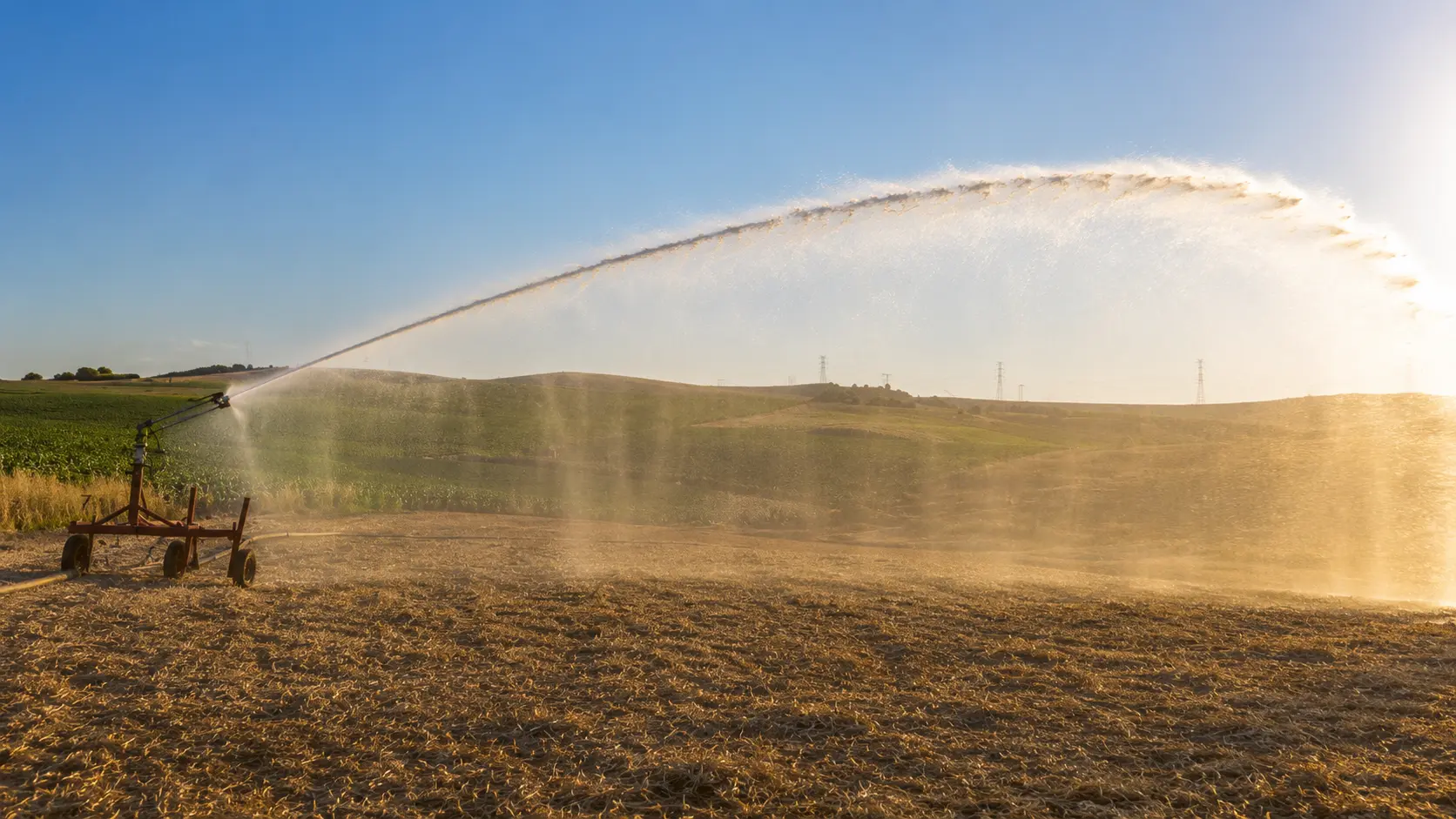
A rain gun throws a wide curtain of water from a single point – covering fodder, wheat, groundnut, nurseries, football and cricket grounds with a fraction of the pipe a sprinkler grid needs. We size the gun to the pressure you actually have, and plan the positions properly so the coverage is even. Since 2018. Trusted by Pakistan Navy & Army.
Jump to:
What does a rain gun cost in Pakistan, and how much does it cover? A rain gun with a stand costs roughly Rs 80,000 to 2 lakh depending on the model and its range. A complete working system – gun or guns, pump, piping, fittings and installation – typically runs Rs 5 to 14 lakh, depending on the area and how many watering positions it needs. On coverage, be careful of anyone quoting you a single circle: guns must be positioned so their circles overlap, or you get dry rings between them. A medium gun throws a 62–89 ft radius on 2–5 bar; a large one reaches 79–154 ft. How many positions your land needs is the real question – send your area size on WhatsApp for a free coverage plan.
All figures are guide ranges. Final cost is confirmed after a free site visit.
01 · How It Works
Why One Gun Beats a Grid of Small Sprinklers
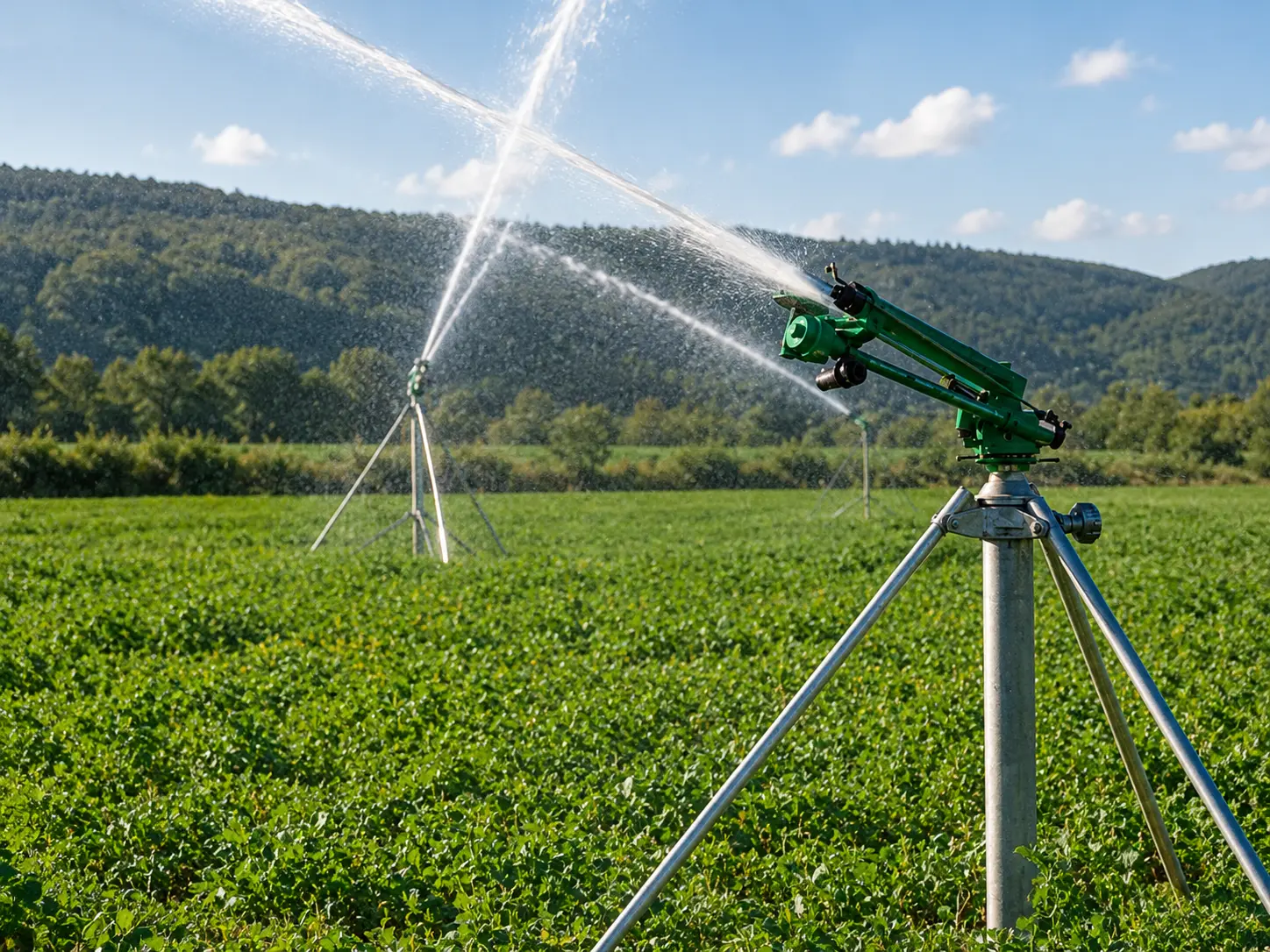
A rain gun is a single heavy-duty rotating sprinkler that pushes water through one large nozzle. The jet leaves at a low trajectory, breaks into droplets as it travels, and falls back over a wide circle – a uniform rain curtain, in the manufacturer's own words. Where an ordinary sprinkler wets ten or twelve feet, a rain gun wets sixty to a hundred and fifty.
That changes the economics on open ground. Covering a field with small sprinklers means dozens of heads, hundreds of feet of buried pipe and a lot of digging. A rain gun does the same field from a handful of standing positions, and you can pick it up and move it. Less pipe, less labour, less capital – which is why it's the standard choice for fodder, broadcast crops and sports grounds.
Impact type or gear driven?
- Impact type – a spring-loaded arm strikes the jet to rotate the gun. Simpler, cheaper, easy to service anywhere. The familiar ticking sprinkler. Best on small and medium guns.
- Gear driven – a sealed water-driven gearbox turns the gun. Smoother, quieter and more consistent rotation, and it scales to the larger nozzles. Costs more, and it's what the bigger guns use.
Why people choose a rain gun
- Wide coverage from each position
- Far less pipe and digging than a grid
- Portable – move it, don't rebuild it
- Ideal for grass, fodder and broadcast crops
- Doubles as dust suppression and cooling
What a system includes
- Rain gun sized to your pressure
- Tripod stand or fixed riser
- Pump matched to flow & head
- Suction and delivery pipe
- Screen filter and pressure gauge
02 · Coverage & Sizing
How Much Area Does One Rain Gun Cover?
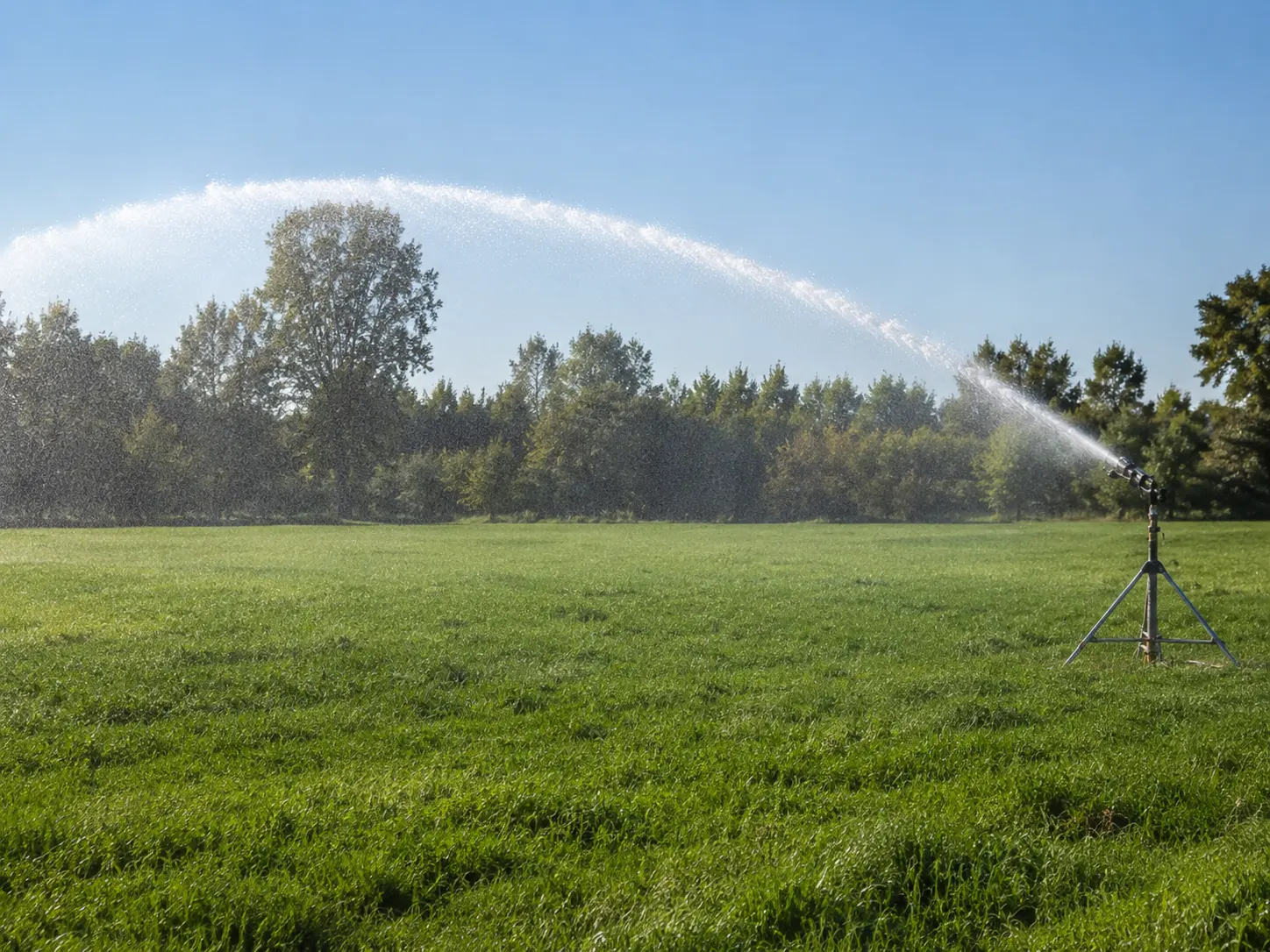
This is the first question everyone asks, and it's the one the market answers dishonestly. A gun with an 89 ft radius does wet a circle of about half an acre – but you cannot irrigate a field by parking it in one spot. Water lands heaviest near the gun and thinnest at the edge of the throw, so the circles have to overlap. Position them at the full diameter apart and you get scorched rings between them.
The overlap rule
- We space positions at roughly 60% of the wetted diameter. A gun throwing an 80 ft radius covers a 160 ft circle, so positions sit about 95 ft apart – not 160.
- Once you allow for that overlap, the effective area per position is far less than the raw circle. Plan on a mid-size gun doing meaningful work over roughly a quarter of an acre per position, not half.
- So a real system is several positions, worked in sequence – whether that's one gun moved along marked points, or a set of guns on a fixed line. Anyone selling you "one gun for your whole field" is selling you dry patches.
What the numbers look like
Guns come in a range of sizes, and the figures always move together – a bigger nozzle throws further but needs more water, so the pump has to keep up. Across the guns in common use here:
- Wetted radius – roughly 60 ft on a small gun, up to 150 ft or more on a large one.
- Working pressure – typically 2 to 5 bar (29–73 psi).
- Flow required – from around 6 m³/hr on a small nozzle to over 40 m³/hr on a large one.
- Nozzle – changeable, usually somewhere between 10 mm and 22 mm.
- Rotation – impact or gear driven, full circle or any sector you set.
Guide ranges. We give you the exact radius, pressure and flow figures for the specific gun we quote, so you can check them against your pump before you commit to anything.
Full circle or part circle
Both guns adjust to a sector. At a boundary wall, road or pavilion you set the arc so the gun waters the grass and not the spectators – and you don't waste water over the fence.
Get a Free Coverage Plan
Send us your area size and what pump you're running. We'll tell you the gun, how many positions, where they stand – and whether your existing pump can actually drive it.
💬 Free Coverage Plan on WhatsApp03 · Where a Rain Gun Wins
Five Jobs Nothing Else Does as Cheaply
- Fodder and broadcast crops – lucerne, wheat, groundnut, pulses, onion. Crops planted close together or scattered need the whole surface wet, which is exactly what a gun does and exactly what drip is wrong for.
- Sports grounds – football, cricket and hockey. A properly positioned set of guns waters a full ground in a fraction of the time a hose takes, and the grass comes up evenly instead of in patches.
- Nurseries and plantations – open beds, saplings and young trees before the canopy closes in.
- Dust suppression – haul roads, yards, construction sites and stockpiles. A gun on a stand settles dust across a wide area with almost no labour.
- Cooling – wetting shed roofs and open yards through the worst of the Karachi summer.
Where a rain gun is the wrong answer
We'd rather tell you now than sell you the wrong thing. A rain gun is not for pots, rooftops or widely-spaced orchards – that's drip irrigation. It's not for a home lawn inside a boundary wall either, where the spray would hit the house and the neighbours – that's a pop-up lawn sprinkler system. And because the droplets travel a long way, strong wind pulls them off course, so on exposed sites we plan watering for early morning or evening.
04 · Pressure & Pump
The Gun Is Never the Problem – The Pump Is
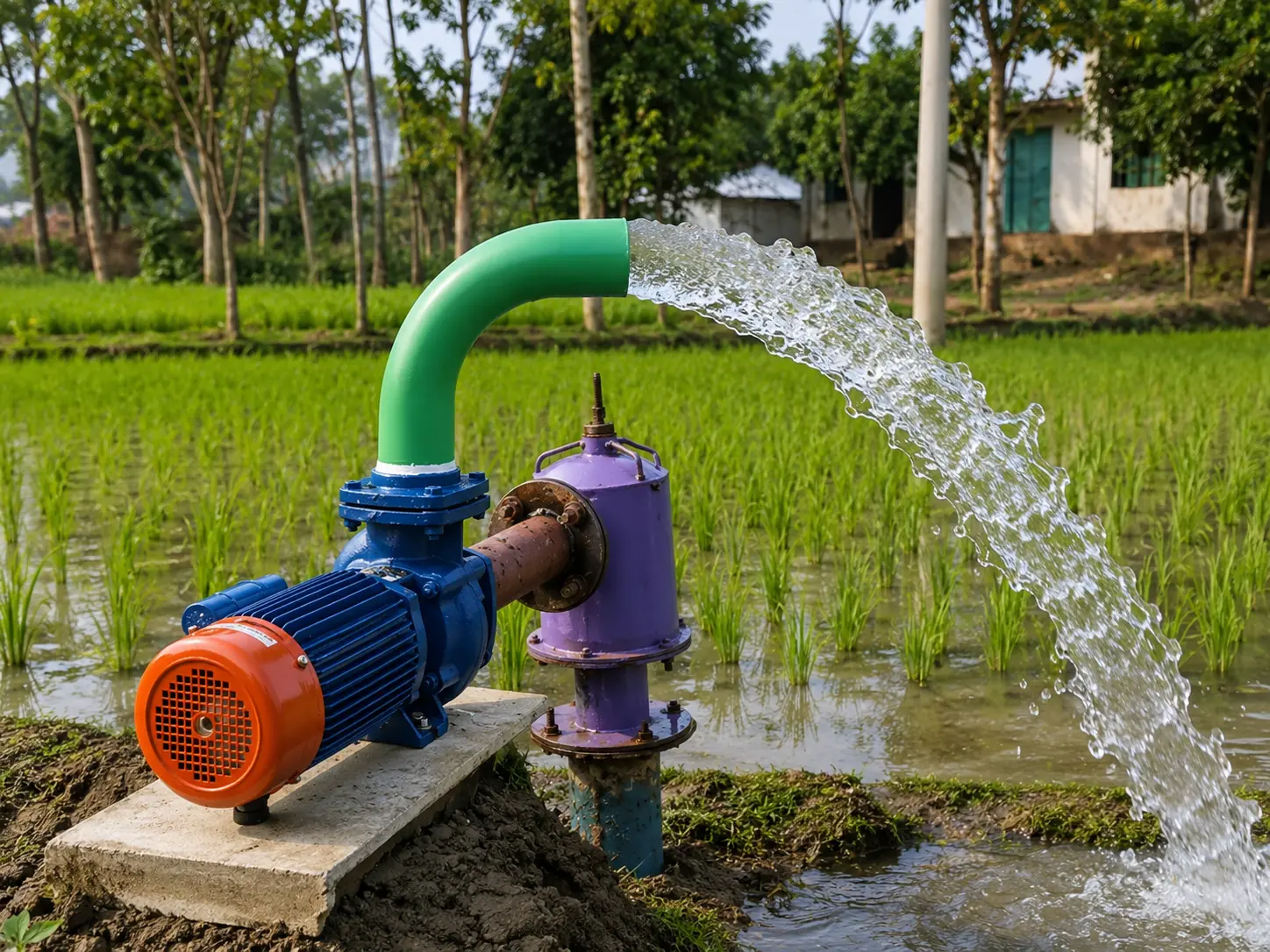
Almost every disappointed rain gun owner we meet has the same story: they bought a gun rated for 89 ft, connected it to whatever pump was already on site, and got 60. The gun was fine. The pump couldn't hold the pressure and flow the nozzle needed, so the jet fell short and landed as heavy drops close in – wasting water and beating down young plants.
Two numbers have to be satisfied at the same time, and people only ever check the first. Pressure decides how far the jet throws and how finely it breaks up. Flow decides whether the pump can actually keep the nozzle fed – a 14 mm nozzle at 4 bar wants around 17 m³ an hour, and no amount of pressure helps if the pump can't deliver the volume.
On power, be realistic. 3 HP is the bare minimum for a gun that needs both high flow and high pressure – but minimum is not the same as recommended, and 5 HP is the sensible starting point for most jobs. On the larger guns, 10 to 15 HP is very common. Actual requirements vary site to site with pipe size, pipe length and lift, so we check what your pump really delivers before recommending a gun. If it isn't enough, we'll say so and price the upgrade honestly rather than sell you something that underperforms on day one.
A properly matched setup, with a screen filter and periodic checks, runs reliably for 5–8 years. The nozzle and bearing are the wear parts, and both are replaceable – you don't rebuild the system.
05 · Guide Pricing
What a Rain Gun Costs in Pakistan
Real guide ranges – your exact price is confirmed after a free site visit.
| Setup | Scope | Guide price |
|---|---|---|
| Rain gun + stand | Gun and stand only, connects to your existing line. Price varies with model and range. | Rs 80,000 – 2 lakh |
| Complete system | Gun or guns, pump, piping, fittings and installation | Rs 5 – 14 lakh |
Where you land in that range depends on the area, how many watering positions it needs, whether the pipe is laid on the surface or buried, and whether we can use a pump you already own.
06 · How We Work
Honest Assessment First
Tell us your area & water
Rough size of the field or ground, and what pump or water source you're on. A photo helps.
We plan the coverage
Gun size, how many standing positions, spacing and overlap – with a clear price range.
You choose your scope
Consultation only, materials only, installation only, or complete turnkey. We'll tell you when you don't need us.
07 · Brands
Quality Components We Trust
The exact brand depends on current availability and what suits your pressure and budget – we'll always tell you exactly what's going in. Rain guns and sprinkler components we work with include DuCaR, Rain Bird, Hunter and K-Rain, with pumps and filtration sourced as quality units sized to your water source. We'll show you the box before it goes on your land.
08 · Warranty & Support
What's Covered
Every installation carries a workmanship warranty – if something fails because of how we installed it, we put it right. Free WhatsApp support is always available for questions and troubleshooting. On-site service visits after handover (general maintenance, accidental damage, relocations) are chargeable, as they involve travel and labour. We're always upfront about what's covered and what isn't, no surprises.
Common Questions
What people usually ask before getting started
What does a rain gun cost in Pakistan?
A rain gun with a stand runs roughly Rs 80,000 to 2 lakh, depending on the model and how far it throws. A complete working system – gun or guns, pump, piping, fittings and installation – typically costs Rs 5 to 14 lakh, depending on your area and how many watering positions it needs. WhatsApp us your area size for an exact estimate.
How much area does one rain gun cover?
A mid-size gun throws roughly a 60–90 ft radius; larger gear-driven guns reach 150 ft or more. But a single circle is not a coverage plan – water lands heaviest near the gun and thinnest at the edge, so positions have to overlap. Realistically, expect meaningful coverage of about a quarter of an acre per position for a medium gun, which means a field needs several positions.
So how many positions will my field need?
We space positions at roughly 60% of the wetted diameter. A gun throwing an 80 ft radius wets a 160 ft circle, so positions sit about 95 ft apart, not 160. We map them onto your actual field shape – irregular plots and boundary walls change the answer, which is why we do it on site rather than over the phone.
How much pressure does a rain gun need – will my motor run it?
Most guns work at 2 to 5 bar. Pressure alone isn't the whole story though: the pump also has to supply the flow the nozzle demands, which ranges from about 6 m³/hr on a small nozzle to over 40 on a large one. On power: 3 HP is the bare minimum for a gun needing both high flow and high pressure, 5 HP is the sensible starting point for most jobs, and larger guns commonly run on 10 to 15 HP. Requirements vary site to site with pipe size and length, so we check your pump before recommending a gun.
Impact type or gear driven – which should I get?
Impact guns use a spring-loaded arm to rotate. They're simpler, cheaper and easy to service anywhere, and they suit small and medium jobs. Gear-driven guns use a sealed water-driven gearbox for smoother, quieter rotation, and they scale to the larger nozzles. For most farms an impact gun is the sensible buy; grounds and big installations usually justify gear driven.
Is a rain gun better than a sprinkler system?
They suit different jobs. A rain gun wins on open land, fodder, broadcast crops and sports grounds where you need wide coverage without laying a full buried grid. A pop-up sprinkler system wins on home lawns inside a boundary wall, where a gun would spray the house. For pots, rooftops and orchards, neither – that's drip.
Will it damage standing crops or seedlings?
Only if the pressure is wrong. At correct pressure the jet breaks into fine droplets that fall gently. At low pressure it lands as heavy drops close to the gun, which can beat down seedlings – another reason we size the nozzle to your actual pump rather than to the catalogue.
Portable on a stand, or fixed installation?
Both work. On a farm, one gun on a stand moved between marked positions is usually the cheapest route. A ground that must be watered on a fixed schedule is better on permanent risers fed by underground pipe – more capital up front, no labour afterwards.
What happens in strong wind?
Wind pushes the droplets off course and makes coverage uneven, and the effect is bigger on a rain gun than a small sprinkler because the water travels so much further. On exposed sites we plan watering for early morning or evening when the wind drops, and where wind is constant we tighten the spacing to compensate.
How long does the system last?
A properly matched setup with a screen filter and periodic checks runs reliably for 5 to 8 years. The nozzle and bearing are the wear parts and both are replaceable – you don't rebuild the system.
Can you supply materials only?
Yes – consultation only, materials only, installation only, or a complete turnkey system. Plenty of farm clients have their own labour and just want the right gun, the right nozzle and a proper coverage plan.
Get Every Corner Watered Evenly
Free site visit across Karachi and Sindh. No overselling. We don't disappear after installation.
Based in Karachi · Free site visits available · Open Every Day, 9am–10pm