
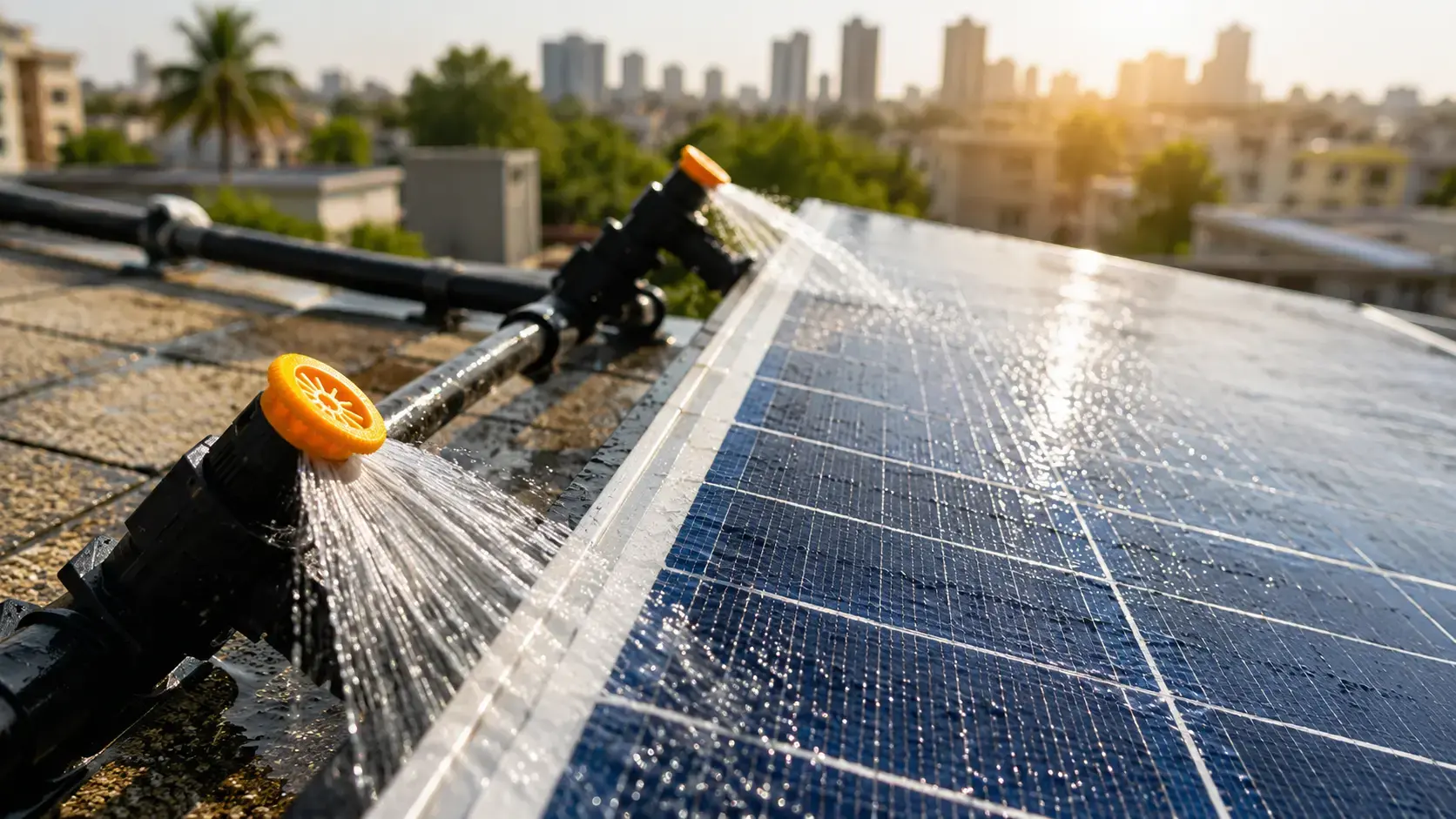
Solar Panel Cleaning · Karachi
Automatic Solar Panel Cleaning Systems in Karachi
Karachi's dust and sea-air grime settle on panels fast and quietly steal 15–25% of your output. An automatic cleaning system washes them on a timer – so the routine cleaning happens on its own and your generation stays where it should be. For homes and factories across Karachi.
What does an automatic solar panel cleaning system cost in Karachi? As a guide, a residential system (10–35kW) runs roughly Rs 60,000–2.5 lakh, while commercial and industrial systems (100kW and up) start around Rs 3 lakh and scale with the array. Dust soiling in Karachi typically cuts solar output 15–25% between cleanings, so the system usually pays for itself in recovered generation. The exact figure depends on panel count, roof layout and water source. Send us your system size (kW) on WhatsApp for a same-day estimate range.
All figures are guide ranges. Final cost is confirmed after a free site assessment of your array and water source.

01 · Why It Matters
Dirty Panels Are a Hidden Electricity Bill
Solar panels only earn their money when light reaches the cells. In Karachi that light has to get past dust storms, construction grime, bird droppings and the salt-laden humidity that rolls in from the sea. A film you can barely see is enough to drop generation noticeably – and after the monsoon, when dust turns to mud on the glass, the loss is worse. Industry testing and real-world sites put the loss between 15% and 25% between cleanings.
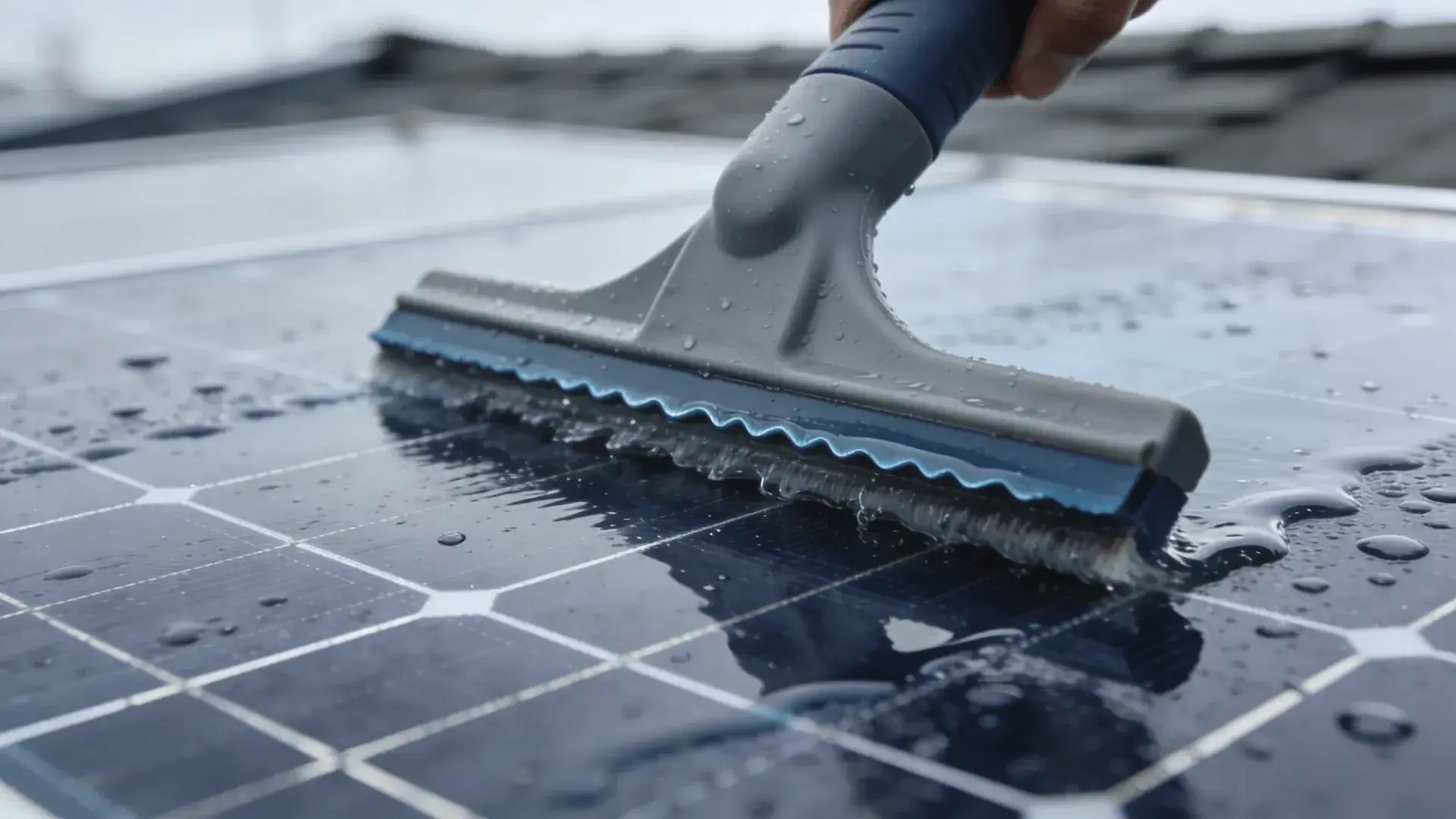
That lost output is money you already paid for and aren't collecting. Hand-cleaning helps, but it's slow, it means someone on the roof with a hose every few days, and it's rarely done as often as it should be. An automatic system removes the guesswork: the panels get washed on a schedule, every time, so the routine work takes care of itself and all you're left with is the occasional wipe-down.
What dirty panels cost you
- 15–25% output loss between cleans
- Worse drop after monsoon (mud, not dust)
- Hot spots & uneven ageing of cells
- Manual cleaning risks scratches & falls
- Generation you paid for, uncollected
What an automatic system does
- Washes on a timer – routine cleaning on autopilot
- No more cleaning by hand every few days
- Recovers the lost 15–25% output
- Just an occasional wipe to keep it at its best
- Sized to your array & roof layout
02 · How It Works
Nozzles, a Pump and a Timer
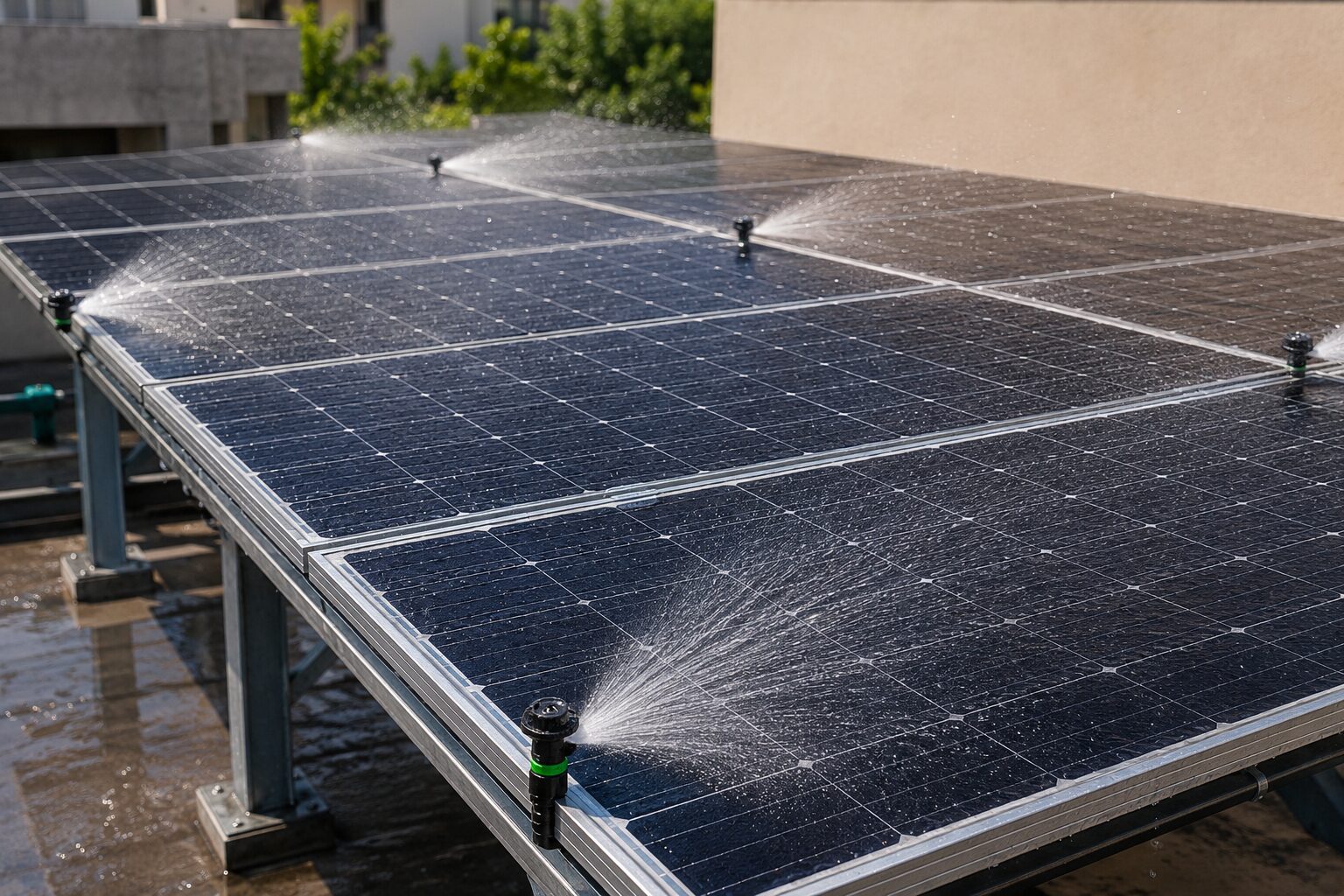
An automatic cleaning system is a network of spray nozzles fixed along the top of your panel rows, fed by a pump and controlled by a timer. At the scheduled time – usually early morning, before the panels heat up – the pump runs for just 3–5 minutes, water sheets down the glass and lifts the dust off, and the panels are clean and dry well before peak sun. It does this every day, on its own, so the routine cleaning happens without anyone having to be there.
It runs on water, so there's nothing exotic to arrange. The system does the regular wash; every so often a quick wipe by hand clears anything the spray leaves behind, like a stubborn bird dropping or a film after a dust storm. The layout and nozzle spacing are matched to your specific panels and roof, so it isn't an off-the-shelf kit – it's designed for your array.
03 · Homes
For Home Solar (10–35kW)
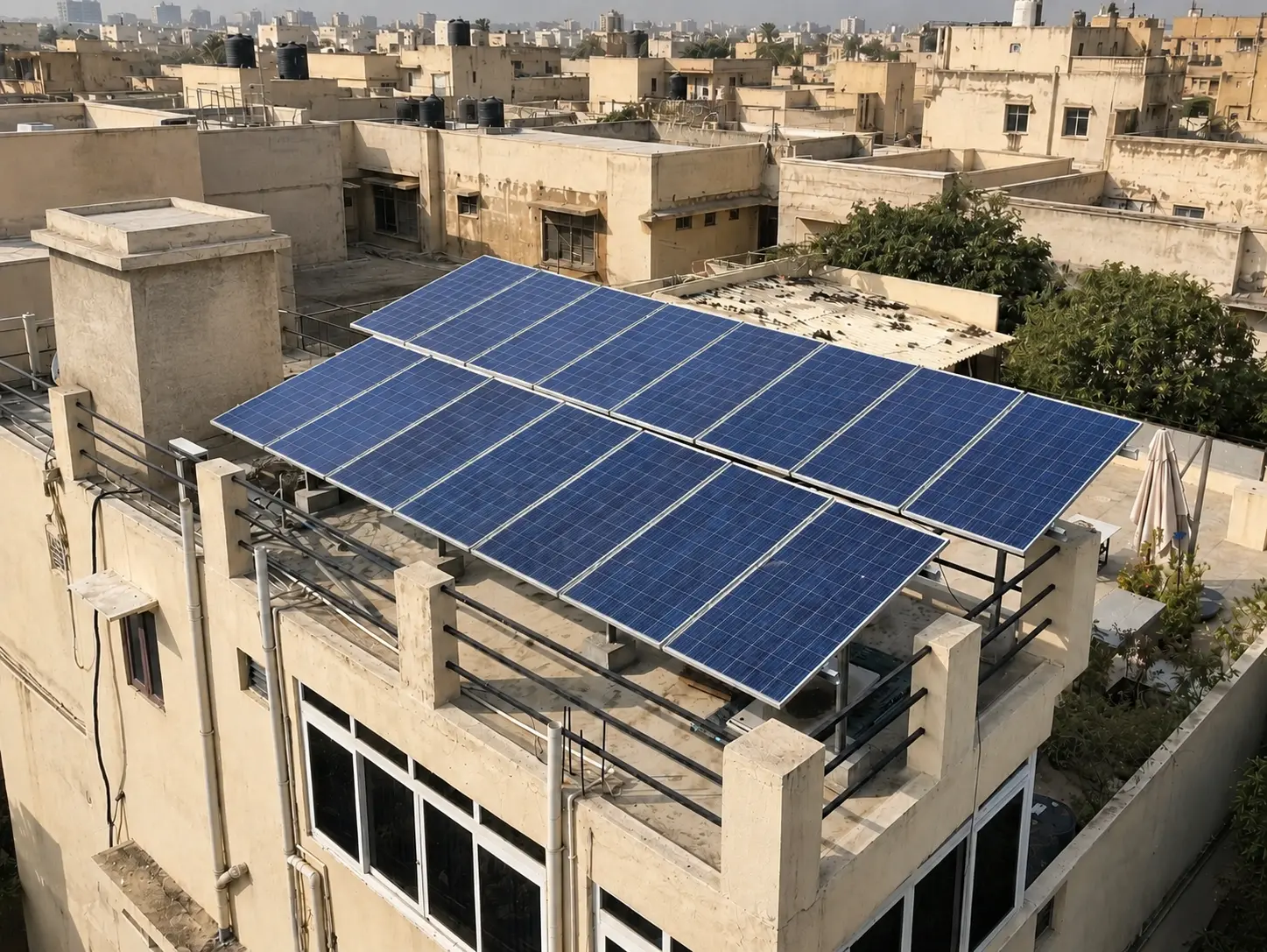
If you've put solar on your house, you already know the reason: the bill. But a home array quietly loses output the same way a factory does, and climbing onto your own roof every couple of weeks with a bucket isn't realistic – so most people simply don't, and the panels stay dirty. An automatic system does it for you, on a schedule, safely.
For a typical DHA, Gulshan or Scheme 33 home running 10 to 35kW, the system is compact and tucked out of the way. You set the cleaning days and forget about it. The output you recover over a year usually makes the system pay for itself, and you never have to think about a dust storm again.
04 · Factories
For Commercial & Industrial (100kW to Multi-MW)
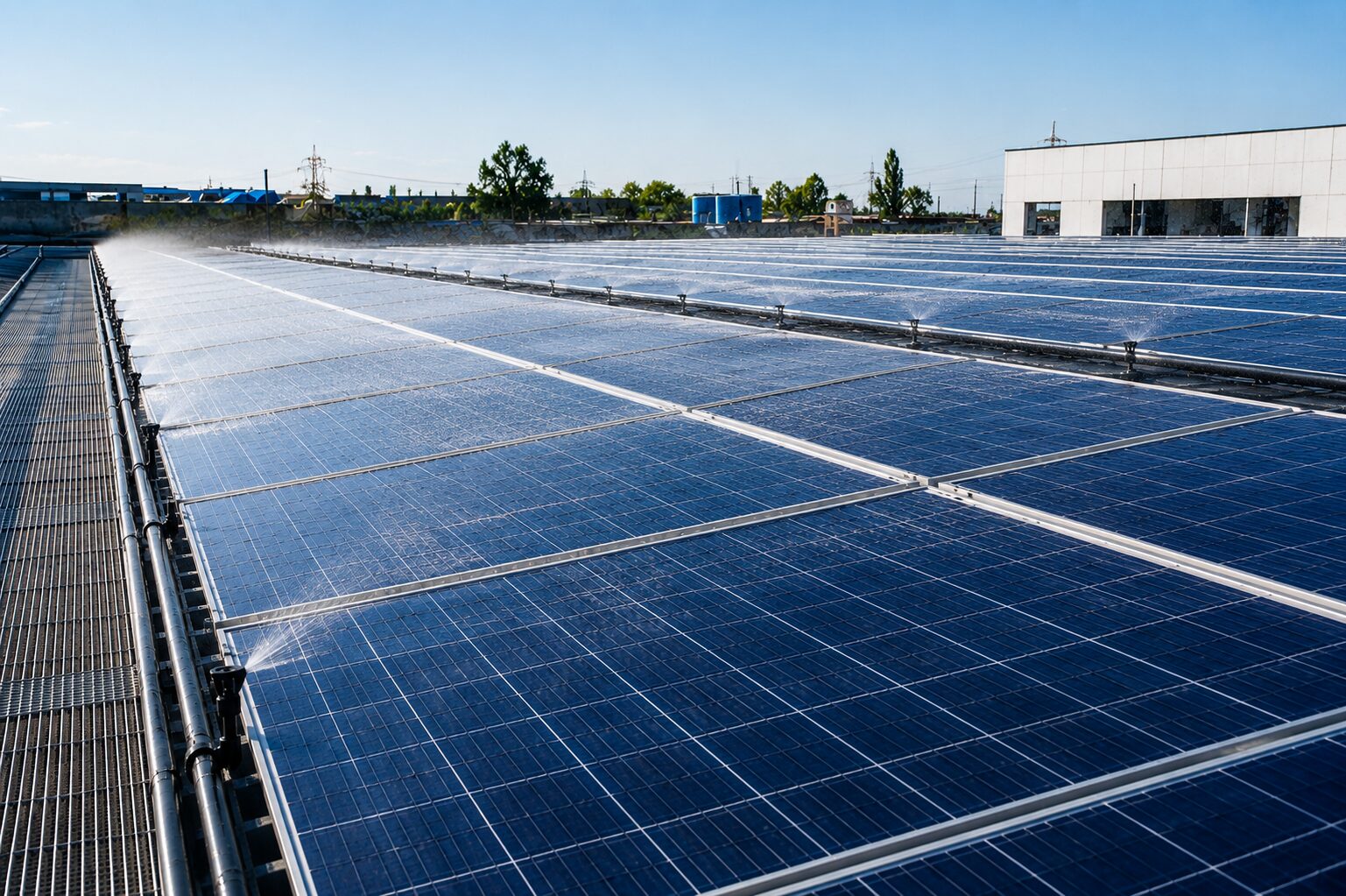
On a factory roof the numbers get serious. A large array at Port Qasim, SITE or Korangi loses the same 15–25% – but on hundreds of kilowatts or several megawatts, that percentage is a large monthly figure in lost generation. Sea air and heavy industrial dust make Karachi's coastal belt one of the harder places to keep panels clean.
Cleaning a large array entirely by hand means a crew, water tankers and real safety exposure on a big roof, over and over – and it's still uneven. An automatic system does the regular wash across the whole array on schedule, cutting that rooftop work down to occasional checks and touch-ups. For facility and plant managers, it turns an unpredictable output loss into a fixed, planned line item.
05 · Output & ROI
What Clean Panels Are Actually Worth
Dust soiling in Karachi typically costs 15–25% of output between cleanings. Here's roughly what that recovery looks like across system sizes – directional figures to show the shape of the return, not a quote.
typical output lost to dust & grime between cleanings in Karachi
routine cleaning runs itself – you're left with just an occasional wipe
a dirty panel loses generation – recovery compounds all year
On a large factory array, recovering even part of a 20% loss can outweigh the system cost within its first year. We'll run the real numbers for your array on the site assessment.
06 · The Honest Bit
The System Does the Work – You Do the Occasional Wipe
We won't oversell this: the automatic system handles the routine cleaning that used to eat your time – the regular dust wash, on schedule, without you climbing up every few days. That's where almost all the output loss comes from, and that's what it fixes.
What it doesn't do is make your panels untouchable forever. Now and then – after a heavy dust storm, or when a stubborn bird dropping won't budge – a quick wipe by hand finishes the job. It's a few minutes once in a while instead of a chore every few days. We tell you this upfront because that's how it actually works, and it's still a huge step up from cleaning everything by hand.
Losing Output to Karachi Dust?
Send us your system size in kW and whether it's a home or a factory. We'll come back with an estimate range and a realistic recovery figure for your array.
💬 Get a Same-Day Estimate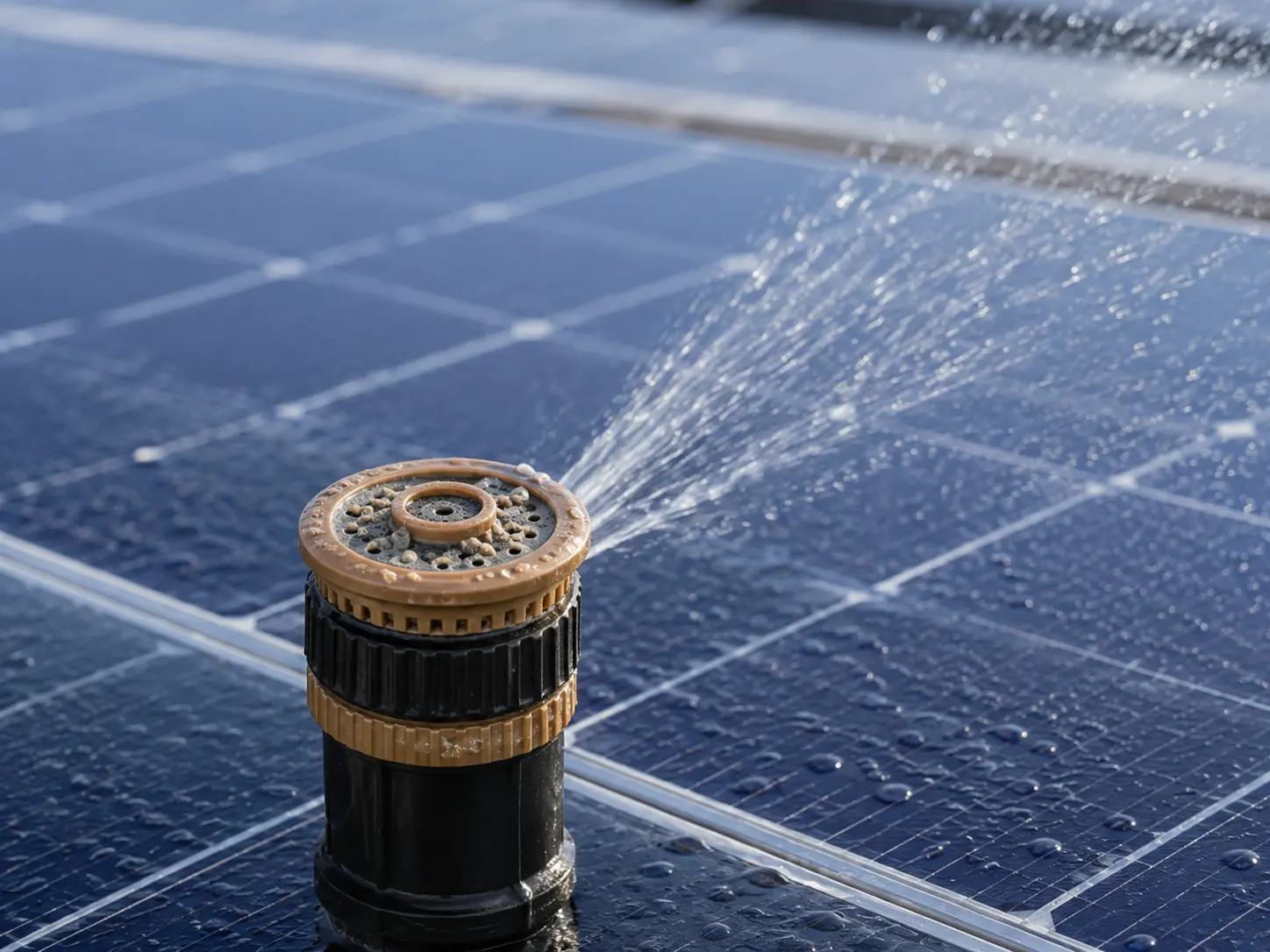
07 · Maintenance
Keep It Running at Full Effect
A cleaning system is machinery: nozzles, a pump, a controller. Left completely alone it can drift out of tune over time – a blocked nozzle here, something that needs a check there. A little servicing now and then keeps the whole thing running properly, which on a large array is exactly where the money is.
We're always on WhatsApp for questions and troubleshooting, and when the system needs a hands-on check or service, we come out and sort it. We'll tell you a sensible servicing rhythm for your system and how hard Karachi's air is on it, so it keeps recovering that lost output year after year.
08 · Guide Pricing
What Solar Cleaning Costs in Karachi
Guide ranges – exact price depends on panel count, roof layout and water source, confirmed after a free assessment.
| System | Who it's for | Guide price |
|---|---|---|
| Residential (10–15kW) | Smaller home rooftop arrays | Rs 60,000–1.2 lakh |
| Residential (15–35kW) | Larger home / bungalow arrays | Rs 1.2–2.5 lakh |
| Commercial / industrial (100kW+) | Factory & commercial rooftops | From Rs 3 lakh · scales with array |
Prices are guide placeholders – confirm your exact costing on the site assessment. Industrial pricing depends heavily on array size and roof access.
09 · Quality
This Protects an Asset, So We Build It Properly
Your solar array is one of the most expensive things on your property, and the cleaning system's whole job is to protect what it earns. The corner-cutting version – an undersized pump, nozzles in the wrong place, a sloppy layout – doesn't just underperform, it can wet the wrong parts of the roof and give you a weak, patchy wash. It looks cheaper on the quote and costs you in output and headaches later.
We design the system to your actual panels, roof and water source, size the pump properly, and place every nozzle to cover the glass evenly without soaking the structure. We'd rather size and fit it right once than have you fighting a weak wash afterwards. That's the honest call we make on every job.
10 · How We Work
Honest Assessment First
Tell us your system
WhatsApp us your system size in kW, whether it's a home or factory, and your area – we'll give you a rough range straight away.
We assess & design it
We check your roof, panels and water source, then design the nozzle layout and pump to your array – with a clear price.
We install & set the schedule
Clean install, timer set to clean at the right time each day – and we're on WhatsApp whenever you need us afterwards.
Proof, Not Promises
Solar Cleaning We've Installed
The output loss is invisible until you see the before-and-after on the inverter. Here are real systems where automatic cleaning brought the generation back.
300 KVA Factory Solar – Cleaned Automatically, Every Time
In Karachi's industrial dust, an uncleaned panel quietly loses a significant chunk of its output every week – and nobody notices until the electricity bill tells them. We fitted a fully automatic cleaning system to this factory's 300 KVA rooftop array, so the panels get their regular wash on schedule and the output stays where it should be. The heavy, repeated rooftop cleaning is done for them; the system pays for itself.
Automatic Solar Cleaning for a 20 KVA Home Plant
A 20 KVA rooftop solar plant is too significant an investment to let Karachi's dust quietly eat into its output. We set up automatic cleaning on a fixed schedule for this home, so the routine wash happens on its own instead of the owner climbing up every few days. Full output through the year, with only the occasional wipe left to do by hand.
11 · Components
Quality Components We Trust
What matters in a cleaning system is that the pump is sized right, the nozzles are placed right, and the layout covers every panel evenly. We use good-quality pumps, nozzles and controllers, and we'll always tell you exactly what's going in. We size to the job and your water source, not to a price tag.
12 · Warranty & Support
What's Covered
Every installation carries a workmanship warranty – if something fails because of how we installed it, we put it right. Free WhatsApp support is always available for questions and troubleshooting. Ongoing servicing (nozzle cleaning, pump and controller checks) is available as chargeable visits when the system needs a hands-on look. We're always upfront about what's covered and what isn't, no surprises.
Common Questions
What people usually ask before getting started
Roof par charh kar manually saaf karna mushkil hai – kya ye automatic ho sakta hai?
Yes, and that's exactly why people get it. Climbing onto the roof every few days with a bucket and hose is slow, risky and rarely done as often as it should be – especially on a high or sloped roof. An automatic system takes that whole chore off your hands: it's fixed to the panels and does the cleaning itself, so you're not going up there for the routine dust wash anymore.
Kya ye timer par fully automatic chalta hai?
Yes. The system is timer-based and fully automatic – you set the cleaning time and it runs on its own, no one has to switch it on. It's designed to clean early in the morning before the panels heat up, so the glass is clear well before peak sun. Set it once and the routine cleaning just happens.
System kitni der chalta hai? Din mein kitni baar?
The system runs daily for about 3–5 minutes – a short automatic wash each day that clears the dust before it can build up and start costing you output. Because it's a little every day rather than a big clean once in a while, the panels stay consistently clean instead of slowly getting dirty between manual washes.
Automatic solar panel cleaning system kaise kaam karta hai?
Spray nozzles fixed along the top of your panel rows are fed by a pump and run by a timer. At the set time – usually early morning – water sheets down the glass, lifts the dust and dries clean, so the routine cleaning runs on its own. The layout is designed for your specific array, and an occasional hand wipe covers anything stubborn.
Kya isse panel par scratch ya nuqsan hota hai?
No. The system only sprays water onto the glass – there are no brushes or scrapers dragging across the surface, which is what actually causes scratches. That's one of the quiet advantages over manual cleaning, where a dry cloth or hard brush on dusty glass can leave fine scratches over time.
Panel warranty void to nahi hoti?
A properly designed cleaning system sprays water gently onto the glass – it doesn't touch the electricals or stress the panel. It's a normal part of solar maintenance and shouldn't affect your panel warranty. If you have specific warranty terms, share them and we'll design around them.
Manual cleaning ki jagah ye kaafi hai, ya phir bhi haath se saaf karna parega?
The system handles the daily dust – which is where almost all your output loss comes from. What it doesn't do is make the panels untouchable forever: after a heavy dust storm or a stubborn bird dropping, a quick wipe by hand finishes the job. So it's a few minutes once in a while, instead of a dangerous rooftop chore every few days.
Manual vs automatic – kya behtar hai?
Manual cleaning is cheaper to start but slow, uneven, risky on a big roof, and usually done too rarely – so panels spend a lot of time dirty and losing output. An automatic system cleans consistently every day, recovers the lost 15–25% output, and on larger arrays often pays for itself within the first year in recovered generation. We'll run the real numbers for your array.
Iski price kya hai (per kW / per panel)?
As a guide, a residential system (10–35kW) runs roughly Rs 60,000–2.5 lakh, and commercial/industrial systems (100kW+) start around Rs 3 lakh and scale with the array. Exact price depends on panel count, roof layout and water source – confirmed after a free assessment.
Ghar (10–25kW) aur factory dono ke liye hai?
Yes – both. Home arrays lose output to dust just like factories do, and climbing your own roof isn't practical, so a compact automatic system suits homes well. For factories across Port Qasim, SITE and Korangi, we install from 100kW up to multi-megawatt. Send us your system size and area and we'll come back with an estimate.
Stop Losing Output to Dust
Free assessment in Karachi. Send your system size and we'll give you an estimate range and a realistic recovery figure – for homes and factories. No overselling. We don't disappear after installation.
Based in Karachi · Free site visits available · Open Every Day, 9am–10pm